

If you're thinking about installing a shading system but haven't yet decided which type is right for you, this article is for you. Pergola awnings and bioclimatic pergolas are two popular options, each with its own distinct advantages. In this article, we break down the differences between the two solutions to help you settle on the one that best fits your needs.
Construction features
The pergola awning is built with aluminium guide rails and cross braces (smaller aluminium profiles) that create a sturdy structure. Its three-layer fire-retardant fabric is significantly more durable than that of traditional awnings.
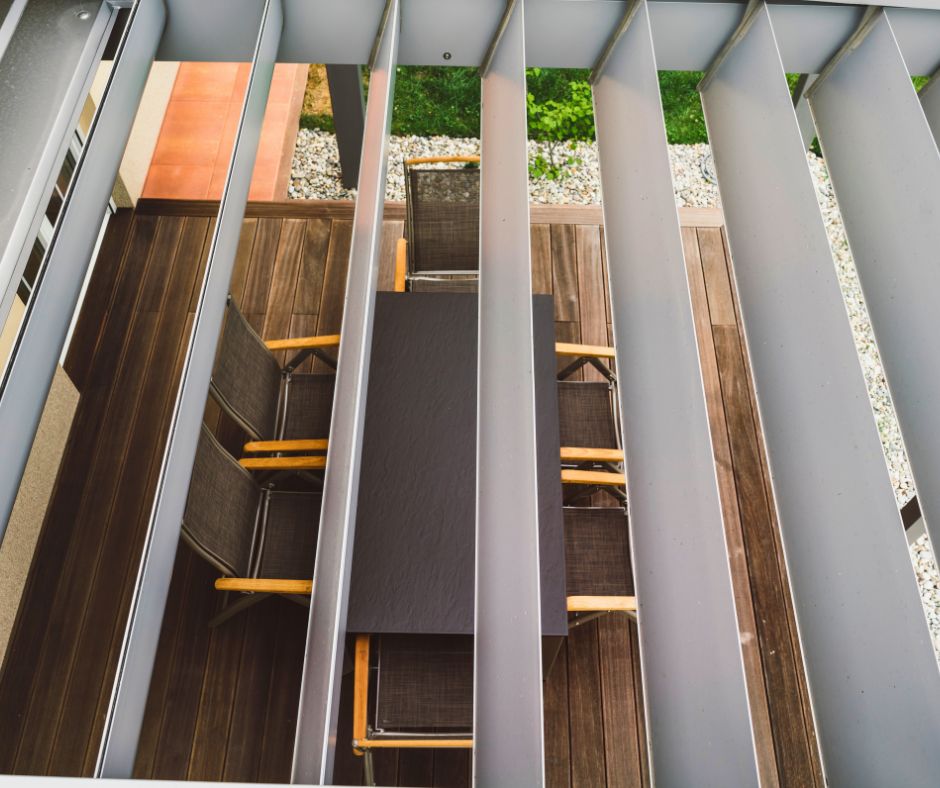
The bioclimatic pergola, on the other hand, is built entirely from electrostatically powder-coated aluminium and features stainless-steel connections. Its louvres are likewise made of aluminium, engineered with a special profile that results in a stiffer, heavier and more durable structure.
Resistance to extreme weather
The pergola awning offers excellent wind resistance, engineered to withstand winds of up to 14 Beaufort. Its blackout fabric blocks sunlight completely, offering full protection from intense solar radiation, while also bearing significant loads such as snow.
The bioclimatic pergola, built entirely from aluminium, offers increased resistance and the ability to fully adapt to changing weather conditions. Whether facing strong winds, heavy rain, snow, or intense sun and heat, its flexible louvres adjust instantly to whatever conditions arise.
Watertightness and drainage
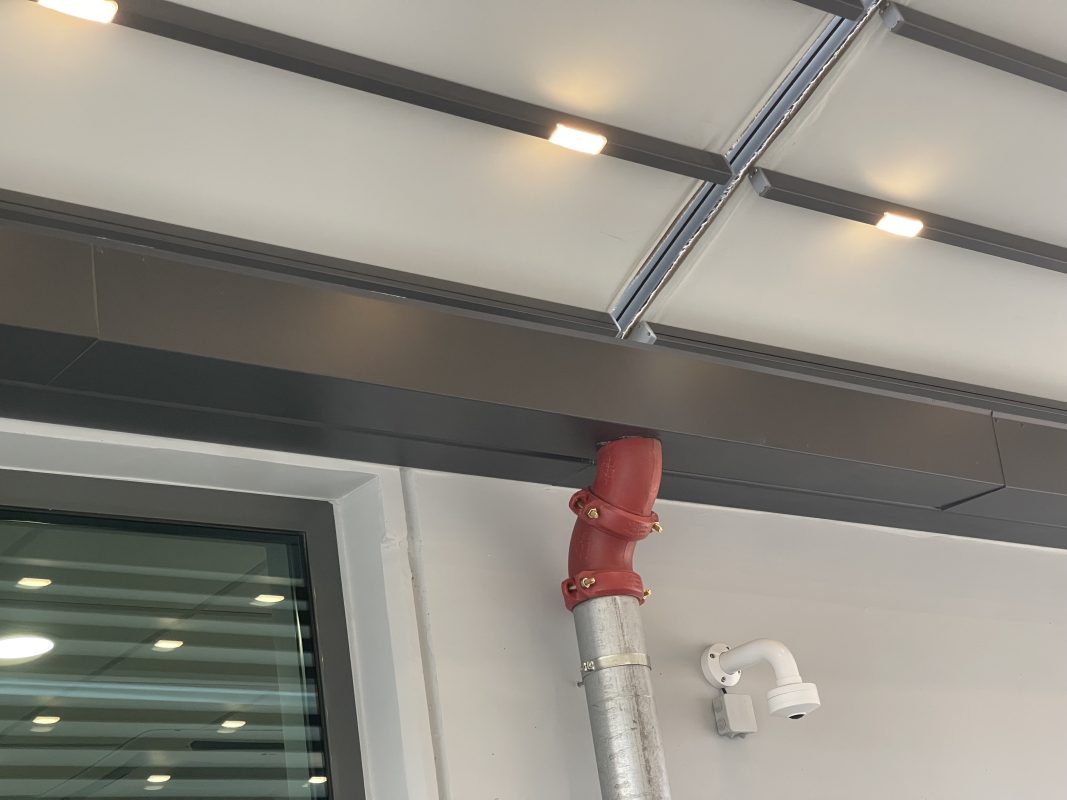
The pergola awning offers flexibility in installation, as it can be mounted at a range of slopes — even applications that require less pitch than classic awnings — giving greater freedom in architectural integration. Even where a fully flat pergola awning is required, there's a flat-roof version available. It comes with a built-in gutter integrated into the front beam, allowing rainwater to drain away efficiently and ensuring the structure's durability and long-term functionality.
Bioclimatic pergolas, on the other hand, offer a completely flat surface with no visible pitch, preserving clean lines and a minimalist design aesthetic. Gutters integrated into the beams, together with a sophisticated rainwater collection and drainage system, ensure complete watertightness and protect the space beneath.
Aesthetic approach
The pergola awning is available in a range of colours and designs and can be easily adapted to the architectural style of any space. You can choose both the colour of the aluminium profile finish and the colour or pattern of the fabric, so the system blends harmoniously into your space. It's a classic, timeless choice on an aesthetic level.
The bioclimatic pergola represents the pinnacle of aesthetics in modern shading system design. Its minimalist look makes it ideal for contemporary architectural applications. You can also choose the colour of the electrostatic powder coating so the system integrates with the broader aesthetic of your space.
Both systems offer the option of integrated LED lighting, which is also an aesthetic upgrade as much as a functional one, creating a striking effect in the evening hours.
Automation
Automation plays an important role in the functionality and ease of use of shading systems. The bioclimatic pergola stands out here, offering a high level of automation with the ability to automatically adjust its louvres according to weather conditions. This means the louvres can rotate automatically to control the amount of light and air entering, or even close automatically during rain.
Pergola awnings, on the other hand, can also be fitted with automation — both for easy opening and closing of the awning and with wind or sun sensors that allow it to respond automatically to weather conditions. That said, the flexibility and adaptability of bioclimatic pergola automation is generally more advanced.
Cost and installation
Cost can be a decisive factor in choosing the right shading system. The pergola awning is generally the more budget-friendly option, while the bioclimatic pergola, due to its more complex construction and advanced materials, comes at a higher cost.
In terms of installation time, pergola awnings can be installed relatively quickly, since the process is less complex. Installing a bioclimatic pergola, by contrast, takes longer and requires specialised labour, due to the assembly of the louvres and the integrated drainage and automation systems.
Conclusion
The choice between a pergola awning and a bioclimatic pergola depends on your specific needs, budget and aesthetic preferences. Both options can deliver high-quality solutions that enhance the functionality and beauty of your outdoor space, turning it into the ideal spot to relax and enjoy the surrounding environment.
Tentoepiloges Chatzigiannis offers both alternatives, guaranteeing quality and reliability in shading your outdoor space. Browse our website for more information and request a free cost estimate from us. Take advantage of our experience to make the best possible choice — and get the best possible installation — of the shading system you choose.
Want to learn more?
Since 1974, we've designed and built custom shading solutions. Contact us for a free assessment.
Request a Quote